The Origin of the GOAT Debate: How Branding Changed Football Forever

Summary
The GOAT debate didn't start in football. Discover the true origin of the GOAT acronym, how it became central to the Messi-Ronaldo era, and what businesses can learn about branding, perception and narrative.
Ask someone who watched the 1970 World Cup on a crackling black and white set, wherever in the world they happened to be sitting, who the greatest footballer of all time is, and they will not say "GOAT." They will not even flinch at the question needing a different word, because for most of their life the acronym did not exist in football at all. They will tell you about Pelé, and they will tell you with a certainty that has nothing to do with statistics. What they remember is not a number. It is a feeling that what Brazil did with a ball that summer was closer to something spiritual than athletic.
Ask their grandchild the same question, and you get a different answer, delivered in a completely different language.
That gap is not really about football. It is about how language quietly decides what gets to count as true.
A Word With No Family History
For more than a hundred years, football did not need the word "GOAT." It had fierce, sometimes violent arguments about greatness, but those arguments were conducted in the sport's own vocabulary. Pelé was O Rei, the King. Maradona was spoken of in Argentina the way people speak of miracles, with a reverence that bordered on religion. Publications crowned a "Player of the Century" and let the title do the work. In pubs in Manchester, on terraces in Milan, in schoolyards in São Paulo, greatness was measured in stories passed between generations, in nicknames earned on cracked concrete, in the reputation of a man who could nutmeg three defenders and still make it home before anyone noticed he had skipped his chores to play.
Nobody called any of them the GOAT, because the sport simply did not speak that language yet.
Ironically, english football already had a relationship with the word "goat," and it was an insult. A defender who scored an own goal or a striker who fluffed a decisive penalty became the team's goat, short for scapegoat. "From hero to goat" was a stock phrase in British sports pages for decades. The same four letters that now crown a player as untouchable once condemned him to shame.
That is not trivia. It is proof that words do not carry fixed meaning. Meaning is negotiated, argued over, and eventually settled by whoever holds the loudest and most persistent claim on the culture. Football did not settle this one itself. It inherited the settlement from somewhere else entirely.
Borrowed, Not Built
"GOAT" was never football's invention. It grew out of American sporting culture, specifically boxing, long before hip-hop carried it into everyday speech. Muhammad Ali called himself "The Greatest" with a swagger that made the claim impossible to ignore. Decades later, LL Cool J turned the acronym itself into a brand, and by the time social media began stitching continents together into one running conversation, "GOAT" already carried real weight in American culture. It did not need football's permission to mean something.
Football simply picked it up off the floor, at almost exactly the right moment.
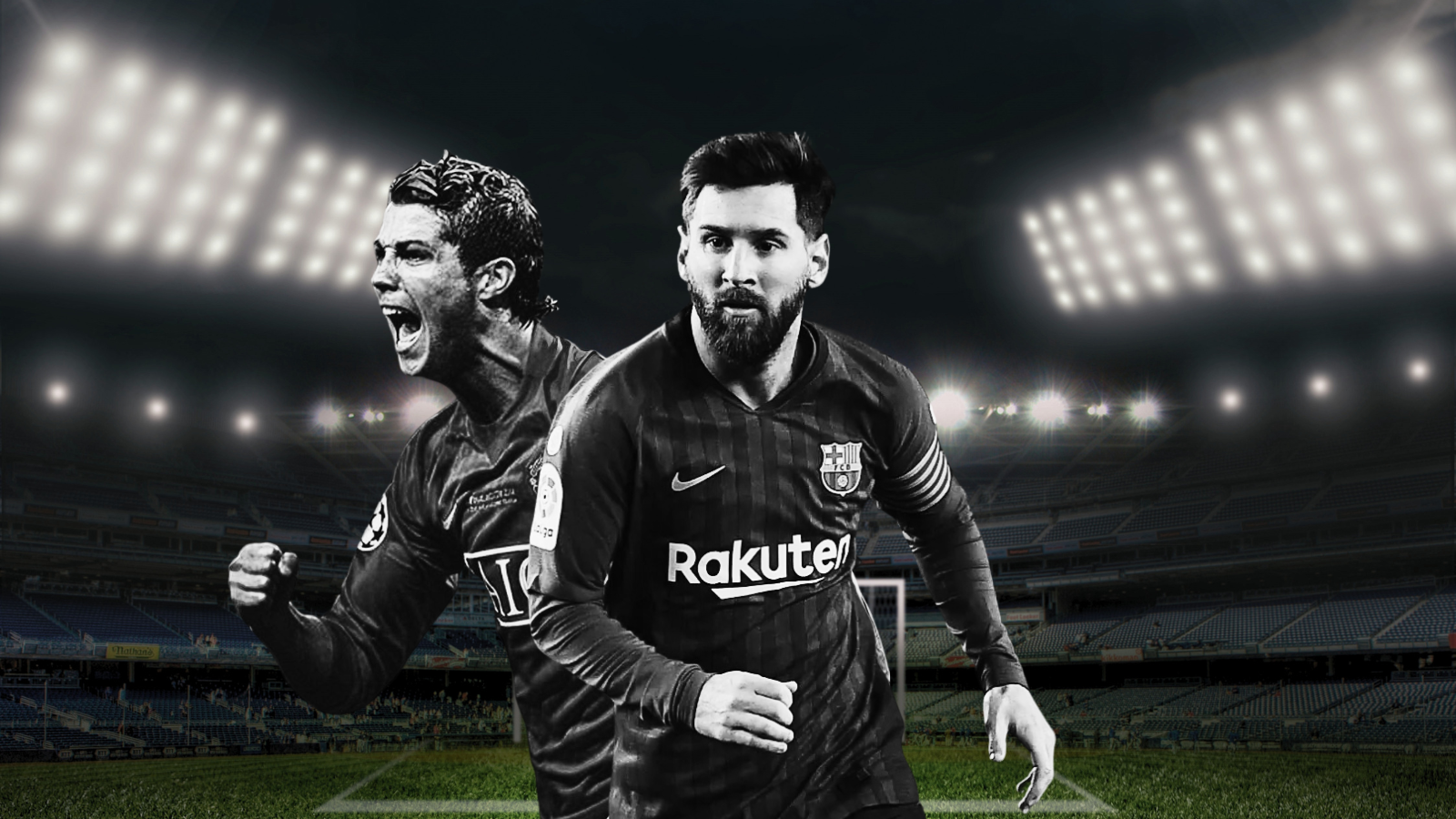
Around 2009, something genuinely unprecedented was happening on the pitch. Lionel Messi began a run that would end in four consecutive Ballon d'Or wins. Cristiano Ronaldo had just arrived at Real Madrid, and what followed was arguably the most sustained individual rivalry the sport has ever produced. Every few weeks, one of them broke a record the other had set only months earlier. It felt less like competition and more like two men trying to out-write each other's biography in real time.
But extraordinary football alone does not explain why the argument went global. What explains it is that, for the first time in football's history, a teenager in one hemisphere and a teenager in another were watching the exact same highlight, at the exact same hour, arguing in the exact same comment thread. Facebook had just become part of daily life on nearly every continent. Twitter turned football punditry into a public, permanent, searchable argument. YouTube meant you no longer needed to be in the stadium, or even in the same country as the broadcast rights, to see the goal everyone was already talking about.
American internet culture rode along on those same platforms. American sporting language rode with it. Nobody voted on the change. Football simply woke up one day already speaking it, in São Paulo and Seoul and Stockholm alike.
That is not only a sports story. It is a branding story, and a sharp one.
Branding Rarely Creates. It Renames.
Here is something most businesses get backwards. They assume branding is about invention, about conjuring something from nothing. It rarely is. Branding is usually about finding better language for something that already exists. Companies do not typically invent the concepts they become famous for. They find the phrase that survives repetition, and repetition does the rest.
Football lived through exactly this. The question "who is the greatest?" is centuries old in every sport that has ever existed, everywhere it has been played. What changed was not the question. What changed was the packaging. "GOAT" compressed an impossible, emotional, generationally contested debate into four letters short enough for a headline, sharp enough for a hashtag, and flexible enough to survive a decade of arguments without ever needing to be resolved.
Good branding does not oversimplify a subject into meaninglessness. It strips away friction while keeping the meaning intact. "GOAT" managed that rare trick, and once it caught on, most people forgot there had ever been another way to say it.
How a New Reality Gets Installed Quietly
Nobody announced this shift. Nobody voted on it. It happened the way most real cultural change happens: without ceremony, one repetition at a time. A commentator used the word on air. A blog picked it up because readers were already searching for it. Fans repeated it because it was shorter and punchier than anything they had. Headlines adopted it because headlines chase whatever spreads fastest. Creators used it because the algorithm rewarded controversy, and nothing manufactures controversy like forcing millions of people to rank their heroes against each other.
By the time a child born in 2010 was old enough to care about football, GOAT was not new slang to them, wherever they were growing up. It was simply what the debate was called. They had no memory of a before.
That is the part every serious brand strategist should sit with. Perception is not changed by one brilliant campaign. It is changed the way a riverbank is changed, slowly, by water that never stops moving, until one day the shape of the land is simply different and nobody can point to the exact moment it happened.
There is a real lesson underneath all of this for anyone building a business, and it has nothing to do with football. Market leadership is rarely won by product quality alone. History is full of companies that built the better product and still lost the category, because a competitor got there first with the word that stuck. People are not, in the end, buying products. They are buying meaning, and whoever successfully defines that meaning for a category tends to define how the whole market thinks, long after the original argument about quality has been forgotten.
That is why branding was never really about logos or colour palettes. Those things are the visible skin of something deeper. Real branding is the work of shaping the words a customer instinctively reaches for when they try to describe what you do.
When Visibility Starts to Feel Like Truth
There is a second effect of the GOAT era that gets far less attention, and it is worth sitting with honestly.
Scroll through football Twitter after any Champions League night, anywhere in the world, and you will hear young fans argue with total conviction about players they have never actually watched. Messi is unquestionably better than Pelé, some will insist. Ronaldo would dominate any era, others will swear. These are not casual opinions. They are delivered like settled fact, even though most of the people arguing have never watched a full ninety minutes of Pelé, Di Stéfano, Cruyff, Best, or Eusébio play.
That is not a failure of younger fans. It is simply what happens when one generation is the most documented in the sport's history and the one before it survives mostly through fragmented footage, disputed statistics, and stories told by people who were actually there. Messi and Ronaldo exist in high definition, replayed from six camera angles, backed by data down to the metre. Pelé exists mostly in legend.
Visibility manufactures familiarity. Familiarity, given enough time, starts to feel like superiority, whether or not it actually is. Marketers see this pattern constantly. Consumers routinely assume the brand they encounter most often must also be the brand that leads its category, and that assumption is frequently wrong. It is simply what repeated exposure does to human judgment. Football fans are not exempt from that psychology. Nobody is, anywhere.
From Argument to Identity
There is a final reason this debate refused to die down, and it explains why it gets so personal, so fast. Somewhere along the way, the GOAT debate stopped being about performance and became about identity.
Supporting Messi or Ronaldo eventually meant something beyond football itself. Entire communities formed around defending one man and attacking the other, communities with their own language, their own inside jokes, their own grievances, stretching from one time zone to the next without ever needing to meet in person. The algorithm did not create that tribalism, but it certainly profited from it, because conflict holds attention in a way agreement never can.
Anyone building a brand should recognise this instinctively. Communities are almost never built around a product's features. They are built around what the product lets people say about themselves. The strongest brands do not simply sell a solution. They hand people language, symbols, and a story they can use to signal who they are to everyone else watching. Statistics alone cannot explain why grown adults argue about football until their voices go hoarse, in a dozen languages, on every continent. Identity can.
The Football Never Changed
Here is the part worth saying plainly, because it is easy to lose in all the noise. Nothing about Pelé's career changed the day the word GOAT entered football's vocabulary. Nothing about Maradona's brilliance changed. Nothing about what Cruyff did for the modern game changed, and nothing about Messi's genius or Ronaldo's relentlessness changed either.
The football stayed exactly what it always was.
The language changed. And once the language changed, the entire conversation changed with it, and eventually the history itself began to be told through that new language, as though it had always been the only one available.
At BrandForge, this is the principle we build every strategy around. Markets are rarely won purely on execution. They are won by shaping perception before a competitor even understands that perception is the actual battlefield. Branding is not the art of making people notice you. It is the discipline of giving them a framework for understanding you, one strong enough that they eventually forget there was ever a different way to see the category at all. The businesses that last for decades are almost never the loudest. They are the ones that quietly set the vocabulary everyone else ends up using without realising where it came from.
Football's adoption of "GOAT" proves something worth remembering in any market, on any continent. Ideas are not only won through evidence. Sometimes they are won through language, repeated patiently, until it stops sounding like an opinion and starts sounding like fact.
So the next time someone argues passionately about football's GOAT, in a stadium bar in London, a barbershop in Buenos Aires, or a group chat that has been fighting about this since 2016, the more interesting question is not who actually deserves the title.
The more interesting question is why an American acronym, borrowed from an entirely different sport, became powerful enough that millions of football fans across every continent now assume it was always the world's game's own word.
Nobody planned that. But it may be one of the clearest lessons in branding we have ever seen play out in public, argued in real time, by millions of people who had no idea they were the ones proving the theory.
Culture changes language. Language changes perception. And given enough time, perception has an extraordinary ability to rewrite history itself.
About the Author